
Batch 10
Certificate Programme in Design Thinking and Innovation
Develop an Innovative Mindset, Powered by Creativity
Upcoming Application Deadline:
Invalid liquid data
Enrol before Invalid liquid data. Take the first step towards growth, today.
Programme Overview
By integrating modern techniques, the programme helps professionals enhance creativity, streamline ideation, and accelerate the prototyping phase. Participants will explore innovative strategies to drive business growth and user-centric solutions across industries.
USD 14.9 billion
Programme Highlights

150+ Engaging Recorded Video Lectures

15+ Innovative Assignments

10+ Short Quizzes

1 Campus Immersion (Optional)

3 Live Faculty Webinars

1 Capstone Adventure Project
Note: The final number of quizzes, assignments, case studies and live lectures will be confirmed closer to the programme start. Details of Weekly Office Hours with Faculty (Online) would be sent to selected participants as part of Academic Orientation.
Who is this Programme for?
This programme is specially curated for:
Designers, Design Engineers, Creative Managers, Art Directors, UX Designers, UX Design Consultant, UI Designers, wanting to gain expertise in developing innovative customer-centric solutions
Product, Marketing, Branding, Growth, and R&D Managers who would like to use design thinking to develop innovative products for business impact
Entrepreneurs and Business Owners such as CXOs, Managing Director, Founder, President, Chief Strategy Officer who aim to scale their businesses and create social impact through customer-centric innovations
Innovation and Growth Consultants keen on enhancing their clients' business with design thinking and innovation
Programme Modules
Module 1: Introduction to Human-centred Design (HCD)
The Paradox of Our Age
The Principles of Co-Learning
A Shift in Being
What Design is Not
What is Design
Key Concepts of Design
A Simplified Understanding of Design
A Simplified Process of Design
Module 2: HCD and Innovation
Understanding Purpose
Letting Go of What Holds Us Back
What is Creativity?
Thinking Differently
Basic Rules of Design Thinking
The Creativity Heart Set
Everyone is a Designer
Double Diamond and Abstract-Tangible Cycle
Module 3: Context, Environment and Users
Review - Double Diamond and Abstract-Tangible Cycle
Ethnographic Research
Participatory Research
Evaluative Research
Clean Team Case Study
Effective Research for HCD
Design in the World
User Context
Mis-design Around Us
Who are your Users?
Visible and Invisible Users
Hybrid Model of Research
Re-defining the Problem
Module 4: Identifying User Needs
Empathy Map Canvas
Hearing the Unsaid
Designing for Extreme Users
Why is Creativity Becoming More Important?
PLATOS Case Study
Understanding Uncommunicative Users
Waterless Urinal Case Study
The Changing Wish-List
The User Value Proposition
Doing the Homework - Ecosystem
Needs vs. Wants
Module 5: Ideation and Immersion
Creative Ideation and Pattern Recognition
Developing Creative Habits
Creative Thinking Techniques
SCAMPER
Brainstorming Tools
The Importance of True Immersion
Immersive Learning
Immersive Experience in the Design Process
Mindful Design
Automobile Design Process
Design DNA and Moodboards
Module 6: AI, Gen AI & Applications
Introduction to AI
Fundamentals of Machine Learning and Deep Learning
Natural Language Processing and Computer Vision
Fundamentals of Generative AI
Generative AI, Ethics and Future
Module 7: Storytelling and Visualisation
Stories vs. Narrations
Storytellers Across Time and Cultures
Experimental Storytelling
Storytelling in Research
Rural Storytelling Case Study
Storytelling in Design
Brand Stories
The Importance of Visuals and Visualisation
Visualising Human Experiences
Storyboarding or Image Boarding
Module 8: Iterative Design and Sustainability
Iterative Design Process
Waterless Urinal Cubicle Case Study
Research as a Tool
Handloom Case Study
Types of Sustainability
Sustainability in Action
Immersive Research Case Study
Non-Immersive Research Case Study
Module 9: MVP and NPD
What is Minimum Value?
Identifying the MVP
Rural ATM Case Study
Prototyping as a Tool
Critical Stages in Prototypng
Stages in New Product Development
Types of Prototypes
Case Study - Children during the Covid-19 Lockdown
Module 10: Agile Design and Data-Driven Innovation
What is Lean and Agile?
Agile within Design
Designing Agile Processes
Electric Motor Case Study
What is Data-driven Innovation
Data-driven Innovation and Design
ML Lifecycle vs. Design Lifecycle
Generative Design and Nature-inspired Computing
Module 11: Integrating Design, Technology and Business
Project Management Methodologies
Scrum, Kanban, and Scrumban
Example from UI/UX Industry
Example from Finance Industry
Customer Segmentation and Innovation
Design and Systems Thinking
Design and Systems Thinking Working Harmoniously
Business Design
Contributions of a Business Designer
Module 12: Agentic AI & Use Cases
Fundamentals of Agentic AI
Agentic AI in Practice
Building Prompts for Agentic Behaviour
RAG and ReAct Frameworks
Evaluation, Scaling and Ethics
Module 13: Innovation Project Lifecycle and Innovation Management Tools
Logical and Creative Thinking
Product Implementation Lifecycle
Types of Innovation
Roadblocks to Idea Generation and Implementation
Strategies for Whole Brain Thinking
Design Management
Module 14: Innovation Strategies and Taking Ideas to Market
Entrepreneurship in Organisations
Innovation Strategies
Frugal Innovation Strategies
Challenging Assumptions
Safeguarding Your Innovation
Module 15: Designing for Change
Elements of Organisational Culture
Organisational Change Through Design
Storytelling for Organisational Transformation
Context Canvas
Defining the Challenge - Technical vs Adaptive
What are Rituals?
Co-designing Rituals
Celebrating Rituals and Sustaining Rituals
Module 16: Design for Leading
What Leadership is Not
Leadership and Commitment
The Triad of Leadership
Operating from your Being
Leading with Purpose
Inspiring People
The World is Your Playground
Note:
Modules/ topics are indicative only, and the suggested time and sequence may be dropped/ modified/ adapted to fit the total programme hours.
*One campus meetup (optional) is scheduled on May 02, 2026 at IIT Delhi, Hauz Khas Campus. To join the meetup, participants would bear travel and accommodation cost and make their own arrangements.
Programme Coordinator

Dr Vijayaraghavan M. Chariar
Professor, Centre for Rural Development & Technology, Indian Institute of Technology Delhi
Prof. Vijayaraghavan M. Chariar has worked in diverse areas including Design for Sustainability, Frugal Innovation, Traditional Knowledge Systems, and Joyous Leadership. He ha...
Participant Testimonials
Voices of IIT Delhi: Insights from the Learning Community
“What drew me to joining the IIT design thinking course were two main aspects,” Anagha shares in her design thinking programme review. “The prestige associated with IIT Delhi and the opportunity to connect with like-minded professionals and industry experts.” These factors, combined with the course’s promise to deepen her understanding of user-centric design, made it an irresistible opportunity.
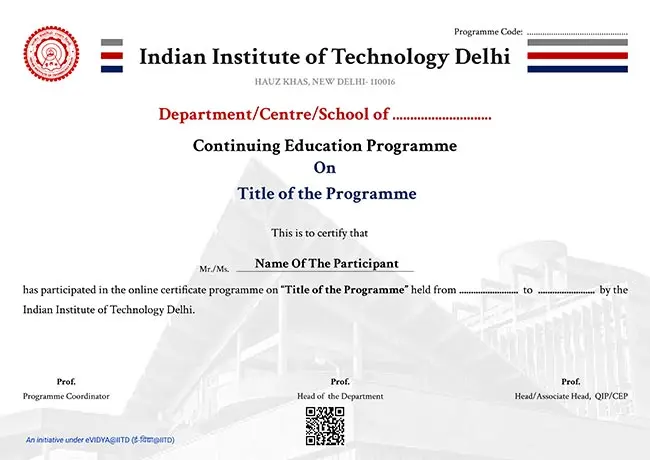
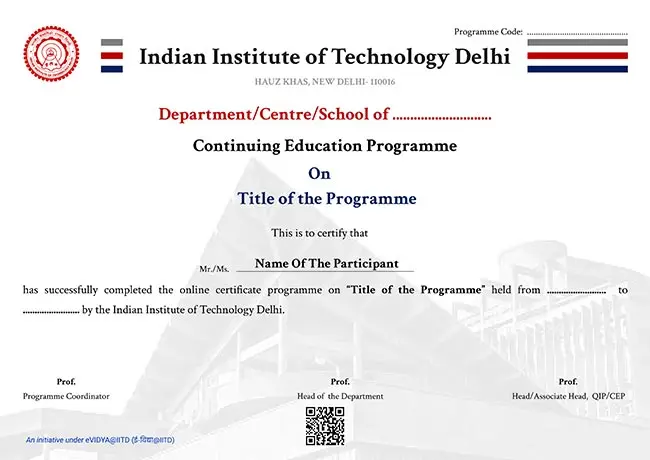
Programme Certificate
Note:
All certificate images are for illustrative purposes only and may be subject to change at the discretion of IIT Delhi.Only e-certificates will be issued by CEP IIT Delhi.
The organising department for this programme is the Center for Rural Development and Technology (CRDT).
Learning Outcomes
Develop a human-centric mindset while designing, innovating, developing, and testing solutions for new products, services and processes
Understand the role of innovation in the digital era, and drive disruptive innovation
Create a design thinking culture to drive innovation in an organisational set-up
Effectively integrate GenAI into the design thinking process to enhance creativity, streamline prototyping, and produce innovative solutions
Develop the ability to create and test prototypes that are customer-centric and innovative
Unlock Creative Potential with IIT Delhi's Design Thinking and Innovation Programme
Problem Solving
Critical Thinking
User Experience (UX) Design
Entrepreneurial Mindset
Iterative Development
Strategic Planning
Visual Communication
Adaptability
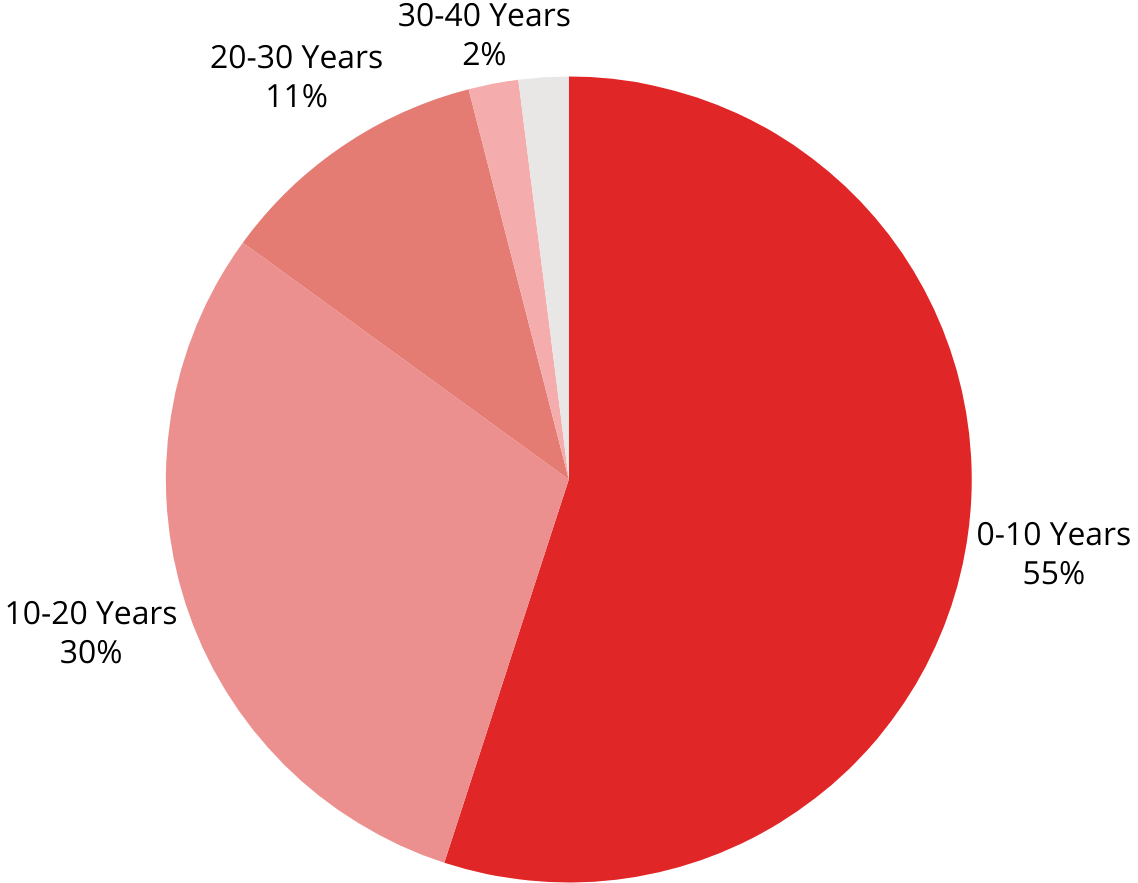
Past Participant Profiles
Work Experience
Top Industries
IT Services
Banking and Finance
Manufacturing
Education
Internet / E-commerce
Top Functions
Information Systems/ Technology
Marketing/ Sales
General Management
Engineering
Design
Top Companies
American Express
Ford Motor Company
IBM
HCL Technologies
ICICI bank
Transforming Ideas into Impact: Hear from the Alumni
Frequently Asked Questions
What is the IIT Delhi Design Thinking and Innovation Programme?
The IIT Delhi design thinking course is an online design thinking certification programme that introduces professionals to human-centric innovation frameworks. This design thinking program helps participants solve complex problems using iterative design, prototyping, and innovation strategies relevant to modern businesses.
What is design thinking, and why is it important for businesses and innovation?
Design thinking is a human-centered problem-solving approach that focuses on understanding user needs, generating ideas, and testing solutions through prototyping and iteration. It is widely used to address complex challenges, improve products and services, and support innovation by encouraging creative thinking and practical experimentation
What topics are covered in this innovation and design thinking course?
This innovation and design thinking course includes fundamentals of design thinking, human-centered design approaches, prototyping and testing methodologies, innovation strategies in business, and advanced tools and techniques.
What are the eligibility criteria for this IITD design thinking certificate programme?
Professionals with a graduate or diploma qualification and at least one year of work experience can apply for this IITD design thinking certificate programme. The design thinking course online is suitable for individuals interested in innovation, creativity, and strategic problem solving.
Will this design thinking certification help in career growth?
Yes. This design thinking certification helps professionals build innovation capabilities across product development, strategy, and business transformation. It is particularly valuable for professionals looking to strengthen their strategic thinking and drive innovation within their organizations.
What certification will I receive from the IIT Delhi design thinking certification programme?
Participants who successfully complete the programme will receive a professional certificate in Design Thinking and Innovation from CEP IIT Delhi.
Can I pursue this programme alongside my job?
Yes. The programme is delivered as a flexible design thinking course online, allowing working professionals to learn while continuing their jobs.
Does this programme cover innovation for startups and entrepreneurs?
Yes. The programme includes modules relevant to innovation course for entrepreneurs and startup innovation strategy, helping founders and business leaders apply design thinking to validate ideas and develop scalable products.
What makes the IIT Delhi design thinking and innovation programme different from other courses?
This IIT Delhi programme in design thinking combines academic insights from IIT Delhi faculty with real-world applications such as innovation projects, case studies, and prototyping exercises. It positions the programme as a strong executive program in design thinking for professionals leading innovation initiatives.
Does this programme include modules on innovation strategy and product innovation?
Yes. The curriculum explores topics such as innovation strategy, product development frameworks, and innovation management tools. These modules make the programme relevant as a product design thinking course and product innovation certification for professionals working on new product development.
What Is the Learning Experience Like?
Join a global community of 300,000+ professionals across 200 countries who have advanced their careers with Emeritus. In a recent survey, 9 out of 10 learners said their expectations were met or exceeded.
From day one, you’ll get access to carefully designed course material, live interactions, and a structured cohort-based journey that keeps you on track. Our approach blends flexibility with accountability—so you don’t just start, you finish strong.
And you’re never on your own. A dedicated programme support team is available 7 days a week to guide you with platform queries, technical support, or any learning-related questions—so you can focus on what really matters: your growth.
A dedicated programme support team is available 7 days a week to answer questions about the learning platform, technical issues, or anything else that may affect your learning experience.
Early registrations are encouraged. Seats fill up quickly!
Flexible payment options available.
Starts On